
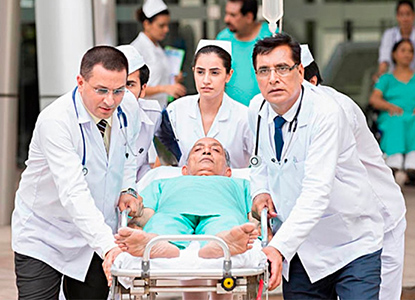
Advanced Trauma Care Management India
Advanced Trauma Care Management India focuses heavily on the rapid response required during the initial moments following a severe accident or physical injury. When a patient arrives at a hospital after a road traffic accident or a fall, the protocols followed are derived from international Advanced Trauma Life Support (ATLS) standards. The primary goal is to identify life-threatening injuries immediately, such as internal bleeding, obstructed airways, or collapsed lungs. Specialists in this field work tirelessly to stabilize vital signs, ensuring that the brain and heart continue to receive oxygen. In India, where road accidents are a significant cause of mortality, the role of trauma management is critical. Hospitals are increasingly establishing dedicated trauma centers that are equipped with CT scanners, blood banks, and operating theaters located right within the emergency department to minimize transfer time. This seamless integration of services helps in reducing mortality rates significantly.
Advanced Trauma Care Management India also emphasizes the coordination between pre-hospital care providers and the in-hospital trauma team. The efficiency of ambulance services and paramedics in India is a crucial component of the trauma care chain. Once the patient is handed over to the hospital team, a multi-disciplinary approach is adopted. This often involves general surgeons, orthopedic surgeons, neurosurgeons, and anesthesiologists working simultaneously on a single patient to address multiple injuries. This "poly-trauma" approach ensures that while one team is fixing a fracture, another might be managing a head injury. The dedication to providing comprehensive care extends to rehabilitation as well, as trauma recovery is a long process. The medical infrastructure in major Indian cities has evolved to support these complex medical needs, offering world-class care that rivals international standards.
Advanced Trauma Care Management India is not just about technology but also about the expertise of the medical personnel who must make difficult decisions under immense pressure. Trauma surgeons and emergency physicians in India undergo rigorous training to handle the psychological and physical demands of the job. They must be adept at communicating with distraught family members while simultaneously performing critical procedures. The legal aspects of trauma cases, such as medico-legal documentation for accident cases, are also handled efficiently by these teams. As the healthcare landscape in India grows, there is a continuous push for better training and more resources in rural areas, ensuring that high-quality trauma management is not just a luxury of the cities but a standard accessible across the nation. This commitment helps save countless lives every year.