
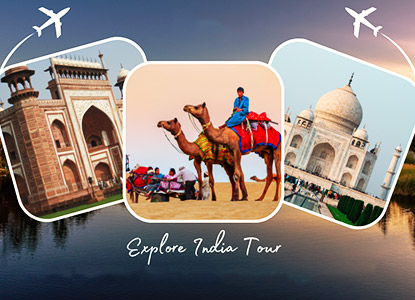
Top All India Travel Itineraries For Every Traveller
Designing the perfect All India itinerary is like piecing together a colourful mosaic each region contributes its own texture, flavour, and rhythm. Some travellers crave grand palaces and monuments, while others dream of misty mountains, tropical beaches, or ancient temples. The best itineraries cleverly combine contrasting experiences so your journey feels rich, varied, and coherent rather than chaotic. Whether you have one week or a full month, you can craft routes that suit first-timers, families, adventure seekers, or culture lovers. By understanding the classic circuits and then customising them to your interests, you can discover top All India travel itineraries that feel uniquely yours.
What Makes An Itinerary Truly All India?
A truly All India itinerary introduces you to different landscapes, cultures, cuisines, and climates within a single trip. It usually includes at least two or three distinct regions for example, the historical north, the spiritual east, and the tropical south. Instead of focusing only on monuments, it should also offer local markets, neighbourhood walks, food experiences, and natural settings. Diversity is the key: mix mega cities with smaller towns, busy days with relaxed evenings, and famous sights with lesser-known gems. At the same time, the route must be realistic, with sensible travel times between destinations and enough rest to enjoy each stop.
How Long Should Your All India Trip Be?
Your available time largely determines how ambitious your itinerary can be. With 7–10 days, you might focus on one main region plus a short extension, such as the Golden Triangle with a quick beach or hill-station break. With 14–18 days, you can add more regions, like combining north Indias heritage with Keralas backwaters or Goas beaches. For a deep, cross-country experience, 21–28 days allow you to connect multiple classic routes comfortably. When planning, remember that Indias distances are big; constant one-night stays can become tiring. Its usually better to see fewer places well than many places superficially.
Which Classic Routes Are Perfect For First Timers?
First-timers often start with the Golden Triangle Delhi, Agra, and Jaipur because it showcases Mughal architecture, Rajput palaces, and bustling markets in an easy loop. From there, you might extend into Rajasthan for Udaipur and Jodhpur, or head to Varanasi for its sacred ghats and river rituals. Another popular combination is North plus South, pairing Delhi Agra with Keralas backwaters and coastal towns. These classic routes offer a balance of history, culture, and relaxation, with good tourist infrastructure and a wide range of accommodation. They are also well-served by flights and trains, making logistics more straightforward for newcomers.
How Can You Add Offbeat Stops To Your Trip?
Once you have chosen a main route, you can enhance it with offbeat stops that reflect your interests. Near Jaipur, for instance, you might add rural stays in Shekhawati or a leopard safari near Jawai. Around Kochi, you could visit lesser-known beaches, spice villages, or hill hamlets in the Western Ghats. Talk to your tour operator about detours for handicraft clusters, vineyards, wildlife reserves, or scenic villages. Offbeat additions work best when they do not require long, complicated transfers. A few well-chosen small-town experiences can make your All India itinerary feel more intimate, authentic, and memorable.
What Is The Best Season For Each Region?
Seasons greatly influence which itineraries work best. North Indias plains and deserts are ideal from October to March, when temperatures are cooler and skies clearer. Hill stations and Himalayan routes are pleasant from March to June and again in September–October, avoiding heavy snow and monsoon landslides. Kerala and coastal areas are attractive almost year-round, though some travellers avoid the peak monsoon months. Wildlife safaris tend to be rewarding in the hotter months, when animals gather around water sources. When planning an All India route, aim to match each region with its suitable season, or be prepared for a few climatic compromises.
How Do You Balance Sightseeing And Relaxation Time?
A common mistake is packing every hour with monuments and long drives, leaving little room to rest or spontaneously explore. When building your itinerary, designate some “light days” with only one major sightseeing activity. Choose a few “base” cities where you stay multiple nights and take day trips rather than constantly changing hotels. Add pockets of downtime sunset walks, café stops, or spa sessions so you can process what you have seen. Good itineraries feel like a rhythm, not a race: intense days are followed by gentler ones. This balance keeps you energised, prevents burnout, and helps you enjoy each destination fully.
Conclusion
The best All India travel itineraries are not one-size-fits-all templates but flexible frameworks shaped around your time, interests, and comfort. By understanding classic circuits and then layering in offbeat experiences, seasonal realities, and rest days, you can design journeys that feel rich yet manageable. Whether you focus on heritage, nature, spirituality, food, or a blend of everything, thoughtful routing turns a long list of destinations into a story that flows. With careful planning and a willingness to adapt on the road, your itinerary will become more than a schedule it will be the backbone of an unforgettable Indian adventure.